

Science in Plain English series by Dr Hussein Naji, PhD
Stress affects digestion in ADHD and autism via the gut-brain connection; it doesn’t clock out when your day does.
Last time, we looked at the everyday layer: missed meals, sensory needs, medication, patchy hydration, executive dysfunction quietly turning lunch into a small administrative crisis.
All real. All worth fixing. But there’s another layer underneath it, one that food advice never touches:
The state your body is in when digestion is trying to happen.
Because your body doesn’t separate “I had a stressful day” from “now it’s time to digest dinner” as neatly as your calendar does.
The difficult meeting may have ended at 5pm. Unfortunately, your colon didn’t receive the calendar update.

Digestion needs the right conditions—not just the right food.
Part of your nervous system runs the things you never consciously decide: heart rate, breathing, digestion. One branch mobilizes you when something needs action; another handles recovery, repair, and digestion.
We call them “fight or flight” and “rest and digest.”
But they aren’t two buttons, one on and one off. A healthy system constantly adjusts the dial, raising alertness when something needs attention, then settling once it’s passed.
For ADHD and autism, research points less to a nervous system stuck ‘on’ and more to a system that struggles to match its state to the moment, and shift smoothly when the moment changes.
Which is why you can feel exhausted and restless at the same time. Too tired to start anything, and somehow still not relaxed.
Your nervous system contains multitudes. Unfortunately, several of them are yelling.
When your system is busy bracing for the next demand, gut movement speeds up or slows down, appetite vanishes, and normal digestive sensations get much harder to ignore.
Digestion works best when the body has enough safety, time, and blood flow to spare for it.
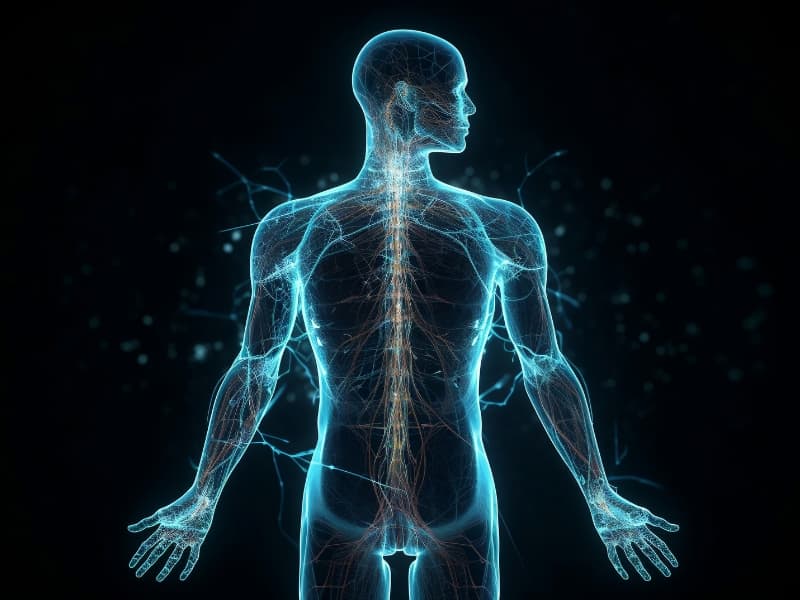
The vagus nerve: the direct line between brain and gut
If there’s one physical bridge between nervous system and gut, it’s the vagus nerve, a major two-way route between the brain and organs including the digestive tract.
Both directions are crucial. Your brain sends instructions down, your gut sends information up—about stretching, nutrients, inflammation, and what’s generally going on down there.
This is why the internet has promoted it to CEO of the entire human body 😄
It is important, but it’s not a magic reset cable. The gut–brain connection also involves hormones, immune cells, and the gut’s own nervous system.
(The connection worth watching: researchers are studying how vagal signaling talks to the brain’s resident immune and maintenance cells (microglia), which monitor their environment, clear damaged material, and take part in inflammation.)
Some early work suggests altered vagal signaling could influence microglial activity in ADHD and autism.
It’s still early but it’s one of the most promising bridges we have between the nervous system and the gut, and exactly the kind of link the coming research should help clarify.
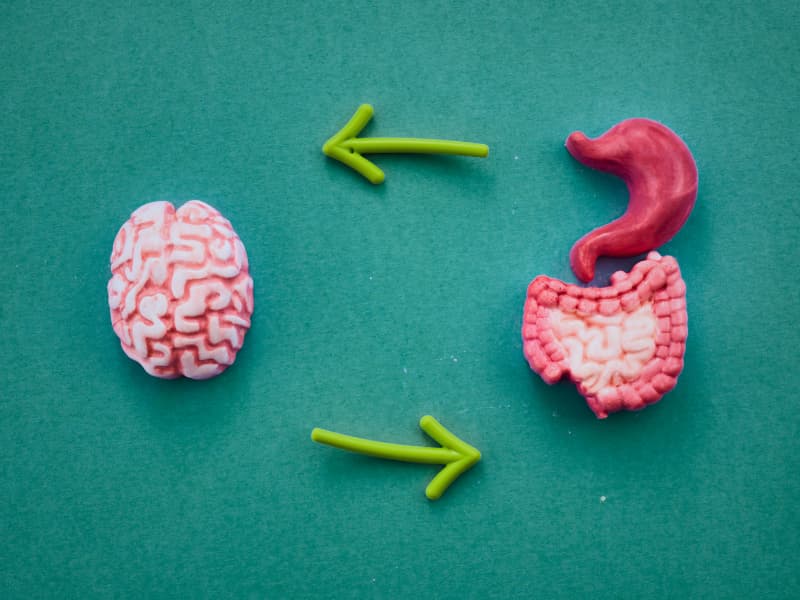
The same stress hormone that alarms your brain acts on your gut
Stress isn’t only an emotion. It’s a physical sequence involving nerves, hormones, and immune cells.
One messenger in that sequence is CRH (corticotropin-releasing hormone). But its effects don’t stay in the brain: mast cells (immune cells especially common near surfaces like the gut lining) respond to it.
In human colon tissue, CRH has been shown to increase movement of molecules across the intestinal lining, through a process involving those mast cells.
That doesn’t mean stress causes histamine disorders, or that you can breathe your way out of a mast-cell condition. It means something narrower but real: stress signals can directly influence immune activity in the gut.
Your nervous system and immune system aren’t two strangers who occasionally meet by the coffee machine. They’re in constant conversation.
Trauma can reach the same alarm system by a different road
Complex PTSD isn’t ADHD or autism—it isn’t neurodevelopmental. It develops in response to prolonged or repeated stress.
But it can look similar from the outside: trouble focusing, sensory sensitivity, emotional reactivity, a nervous system that won’t settle.
Chronic early stress can shape the body’s stress-response wiring so it detects threat faster, stays braced longer, and struggles to notice when things are finally safe.
In plain English: repeated danger can train a body to become very good at preparing for more danger. Sometimes too good—long after the original danger has ended.
But it’s another route to the same overlapping difficulties—and when that old protection program touches appetite, muscle tension, and gut movement, digestion becomes part of the story too.
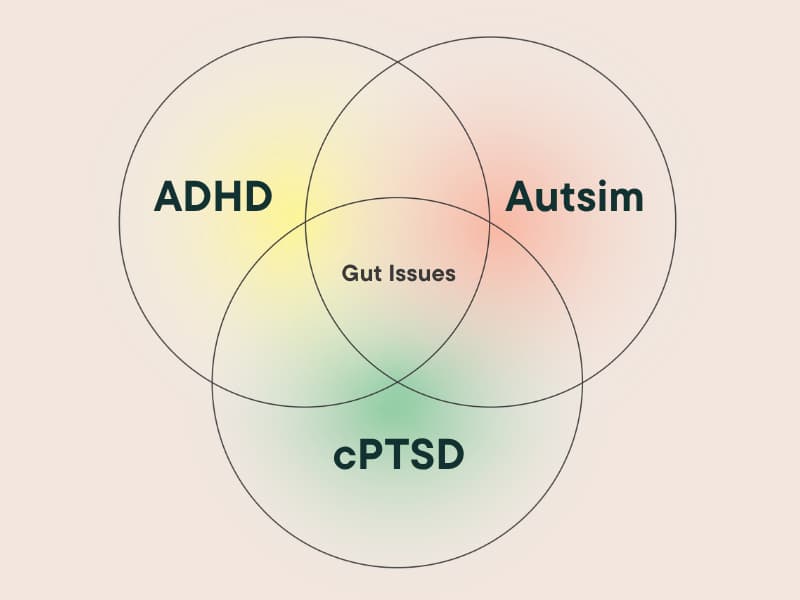
Why ADHD, autism, and gut issues overlap
This is where we have to be careful, because the internet loves to collapse all of this into a single villain.
ADHD isn’t a stress response.
Autism isn’t caused by poor vagal tone.
cPTSD isn’t a neurological disorder.
These are different conditions, with different causes and different treatment needs.
But they can run through overlapping systems. The nervous system, immune system, gut, sleep, pain, and stress response are all in constant conversation.
That gives us one shared point of influence, without pretending we’ve found one shared cause.
At Your Daily®, we think of this as a reactive alarm pattern.
Not a new diagnosis, just a practical way of noticing that different people can reach the same problem by very different routes: a body that has trouble shifting into the conditions digestion actually needs.

How to calm your nervous system before eating
It doesn’t mean a breathing exercise replaces medication, nutritional care, allergy treatment, trauma support, or a proper medical assessment.
It means food isn’t the only useful place to intervene.
So before one meal, try giving your body 60 seconds to shift states first:
- Look slowly around the room.
- Let your jaw loosen and your shoulders drop.
- Move gently if sitting still makes you more tense.
- Make your exhale slightly longer—don’t worry about forcing a giant “healing breath.”
- Remove one source of noise, light, or urgency.
Then eat.
You’re giving digestion slightly better working conditions. Notice what happens, without turning it into a laboratory investigation.
Try it with one meal. Skip the tracking and the color-coded spreadsheets. What’s on the plate matters less than the state your body’s in when it arrives.
Talk soon,
Hussein
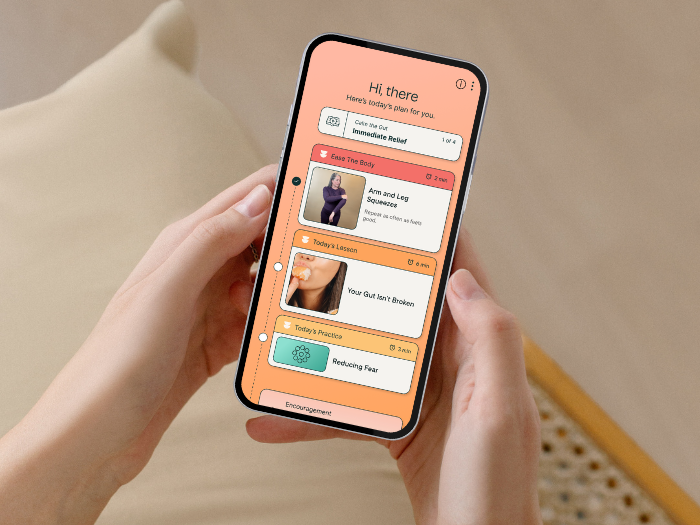
This is the piece we built the app around.
Each day of your plan moves through one short loop: a quick check-in with where your body actually is that day, a somatic practice that gives your nervous system something physical to do instead of ordering it to calm down, a short lesson in plain English, and a moment to notice whether anything shifted.
It takes 3-8 minutes because what retrains a threat response is consistency, not intensity.
That’s what we mean by calm the alarm, calm the gut. A calmer nervous system removes one source of pressure, and gives an already sensitive gut a fairer chance.
If you’ve done the food work and you’re still getting blindsided, this might be the missing half.