
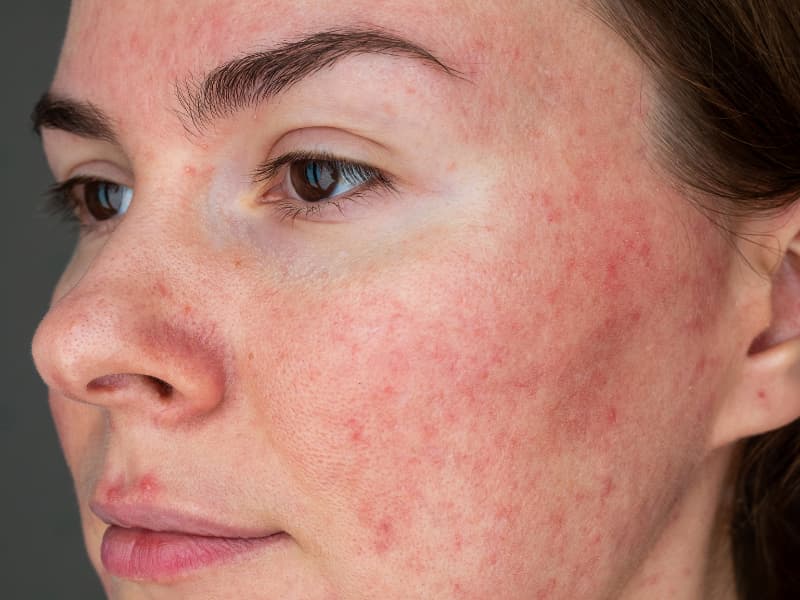
Histamine intolerance gets worse with stress because of a direct link between your nervous system and your mast cells.
You’ve probably noticed it already: You’ve become a detective in your own body, tracking every meal, every product, every environment that might be the trigger. Some days a food is fine. But the same food, made the same way, sets you off two weeks later. Why?
You’ve eliminated so much that your world has gotten small, and you still can’t predict the next reaction. It’s exhausting, like walking through life in a hall of funhouse mirrors—nothing reflects back the way you expect.
If this is you, you’ve probably already heard the words histamine intolerance or MCAS, mast cell activation syndrome.
You’ve probably also already tried the standard advice: cut the aged cheese, the wine, the leftovers, the fermented foods. Maybe it helped a bit. Maybe it helped for a while…but then stopped working.
That’s not a failure on your part. It’s because diet is only addressing one half of a two-part system, and almost nobody talks about the other half.

What causes histamine intolerance
Histamine is a natural chemical your body makes and also absorbs from food. In small, well-managed amounts, it does useful jobs: helping regulate digestion, immune response, and even brain signaling to wake up and stay alert.
The problems start when histamine builds up faster than your body can clear it.
That’s the food side. But DAO isn’t the whole story, and this is where most information stops short.
How mast cells cause histamine intolerance
Histamine doesn’t just come from food. Your own body stores and releases it, primarily from cells called mast cells, which live throughout your gut lining, skin, and airways. Mast cells are part of your immune system. Their job is to sense danger and respond fast.
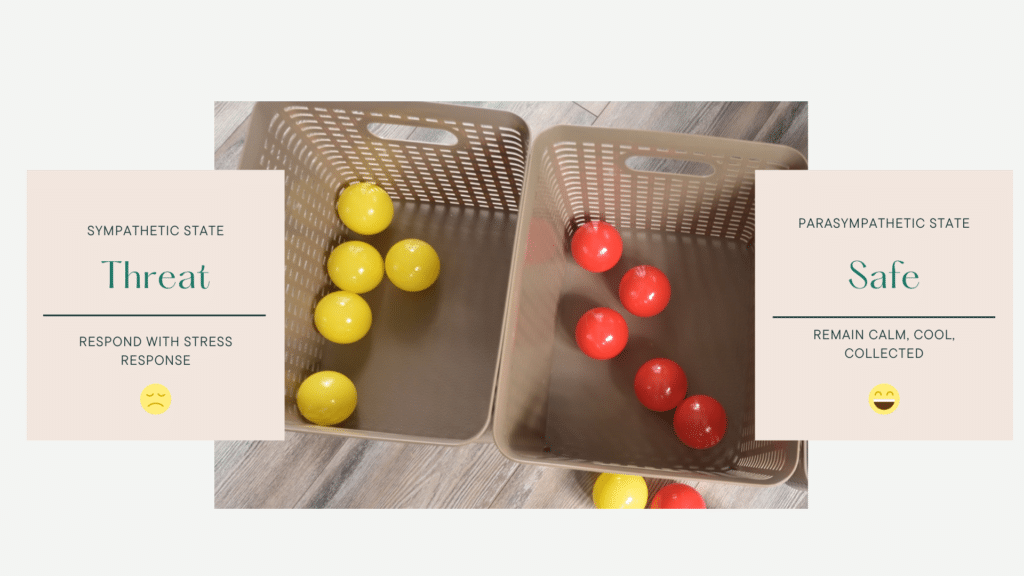
The part that changes how you think about your triggers: Mast cells aren’t only responding to food or allergens. They are wired directly into your nervous system, and they respond to your stress state too.
This is why the same meal can be fine on a calm week and a problem during a hard one. It’s not random and it’s not in your head. Your nervous system’s threat level is functioning as a dial that turns your mast cells’ sensitivity up or down, on top of whatever is happening with food.

Why breathing exercises don’t fix histamine intolerance
If your nervous system is part of the mechanism, it’s fair to ask why a five-minute breathing exercise doesn’t solve it. The honest answer is that a body that has been in a threat state for a long time doesn’t downshift from one deep breath, the same way a car doesn’t cool down from one drop of water on the engine.
A nervous system that has learned to expect danger needs repeated, consistent signals of safety before it recalibrates what “safe” actually means. That requires a retraining process, not a single relaxation technique.
This is also why generic wellness content that reduces nervous system regulation to a bullet point on a slide, alongside sleep and hydration, undersells what’s actually happening.
Regulating your nervous system isn’t a nice extra next to the real treatment. For a body whose mast cells take orders from its stress state, it is a direct lever on the histamine symptoms themselves. It works alongside diet and DAO support—not instead of them—and it’s the piece that explains why diet alone so often plateaus.
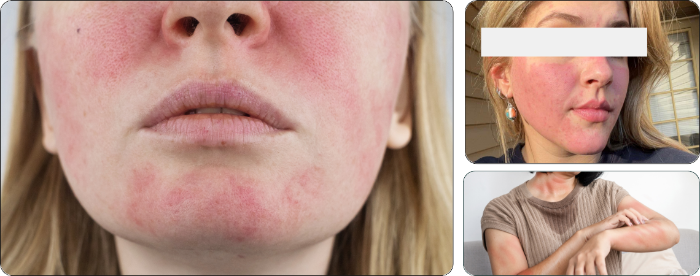
FREE WORKSHOP
POV: You flush after meals that used to be fine
Reactions. Flushing and bloating after eating. Anxiety that shows up out of nowhere. 2am wake-ups. It’s not random, and there is relief.
How to calm mast cells naturally
Real nervous system regulation means giving your body repeated, felt experiences of safety, in a way it can register physically, not just understand intellectually.
That usually looks like short, consistent, body-based practices rather than one long session you do once and forget. Your nervous system learns the way any pattern learns, through repetition, not through a single insight.

How to manage histamine intolerance and stress
Your Daily’s plans work on the stress-digestion connection directly: understanding what stress does to your gut, catching your specific triggers, having tools ready for a flare instead of a rulebook, and breaking the worry loops that build around unpredictable symptoms.
Each day moves through a short closed loop:
- A somatic practice that gives your nervous system something physical to do rather than asking it to sit still
- A short lesson explaining what’s happening in plain language and a moment to notice the shift.
- A practice to bring the lesson into your every day.
- And done before your coffee gets cold: It’s built to be 3 to 8 minutes, because consistency is what retrains a threat response, not intensity.
If you’ve done the diets, the protocols, and the supplements, and you’re still getting blindsided, nervous system regulation might be the missing half.

Science Corner: Stress hormones and mast cells
When your body perceives a threat, real or not, your stress system releases a hormone called corticotropin-releasing hormone, or CRH. Research has shown CRH acts directly on mast cells, triggering them to degranulate, meaning release their stored histamine, independent of any food or allergen exposure.
Separate research on cortisol found something similarly important: cortisol normally helps keep mast cells stable, but under chronic stress, that same hormone flips from stabilizing to triggering, disrupting the balance and increasing histamine release.
SOURCES