

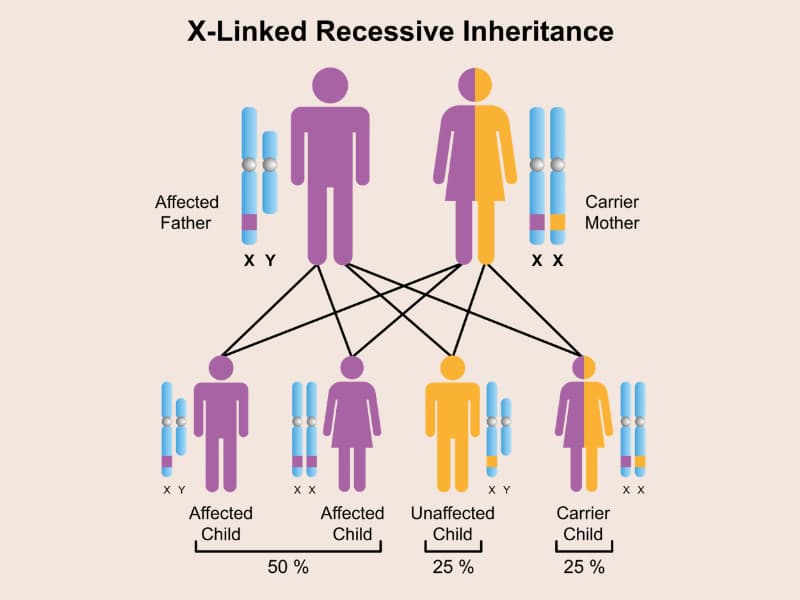
It’s not you, it’s your family tree. Sensitive bodies run in families because of a real genetic link between them.
Take a look at your immediate family: you’re probably not the only one in your family like this.
A parent whose stress response never seems to switch off, even on vacation. A sibling whose joints give out too easily. Another sibling’s ADHD doom piles. Migraines nobody’s traced to a real cause. Someone with Hashimoto’s, Lupus, or an autoimmune diagnosis nobody in the family fully understands.
Family gatherings can start to feel like a club nobody agreed to join. It doesn’t feel like coincidence, and it probably isn’t.
There’s a real, biological reason certain families produce a cluster of people that involves hypermobile, adhd, autoimmune, and sensitive nervous system traits. A family whose bodies and stress systems run hot, and none of you did anything wrong to earn it.

Is hypermobility genetic?
In a rare condition called CAH-X, two neighboring genes can be affected together: one involved in cortisol production and one involved in connective-tissue structure.
Genetically, they’re basically roommates. Because they live so close together, a deletion affecting one can sometimes extend into the other, causing both cortisol-production problems and connective-tissue symptoms.
Science corner: this has actually been documented, not guessed at. Doctors studying a completely different condition, one that affects cortisol production, noticed something they weren’t looking for. A meaningful share of these patients also had loose, hypermobile joints and stretchy skin, the same pattern seen in Ehlers-Danlos syndrome.
When researchers looked closer, they found that the gene involved in cortisol production and the neighboring gene for a connective-tissue protein partly overlap, so a deletion affecting one can sometimes extend into the other.
Researchers have published this directly: in CAH-X, a cortisol-production gene and a connective-tissue gene can be affected by the same deletion, whether you ordered it or not. CAH-X is a rare example, though. It does not explain most cases of hEDS or why all these conditions sometimes appear within the same family.

The genetic link between hypermobility, anxiety, and gut issues
This family pattern doesn’t stop politely at joints and cortisol. Separate research found higher rates of several psychiatric diagnoses among people with EDS or hypermobility syndrome. Some diagnoses were also more common in siblings without a hypermobility diagnosis, suggesting shared family influences that may include both genetics and early environment.
Migraines are also more common in people with hypermobility, while Hashimoto’s can run in families too. And if you’ve read our piece on histamine and mast cells, you already know your stress hormones act directly on the cells that release histamine, one more thread tying a reactive stress system to a reactive gut and immune system in the same body.
Put together, this is why one family tree can produce a hypermobile kid, an anxious teenager, an adult with Hashimoto’s, and someone whose gut reacts to everything on the menu, and it’s rarely four unrelated stories.
It’s frequently one inherited starting point, showing up in a different costume for each person it landed on.
What a genetic sensitivity link means for you
You’re not broken. If you’ve spent years wondering why your body, and the bodies around your dinner table, always seem to need a little more than everyone else’s—more sleep, more care with food, more recovery time after a hard week—this is likely why.
Your nervous system, your gut, and your immune system may have inherited a slightly more reactive factory setting than average, worth understanding rather than fighting.
A body built this reactive needs more deliberate support than the average body does, in exactly the areas you’ve probably already been quietly managing on your own: your gut, your anxiety, your stress load, your nervous system’s ability to come back down after it’s been triggered.

How to manage inherited nervous system sensitivity
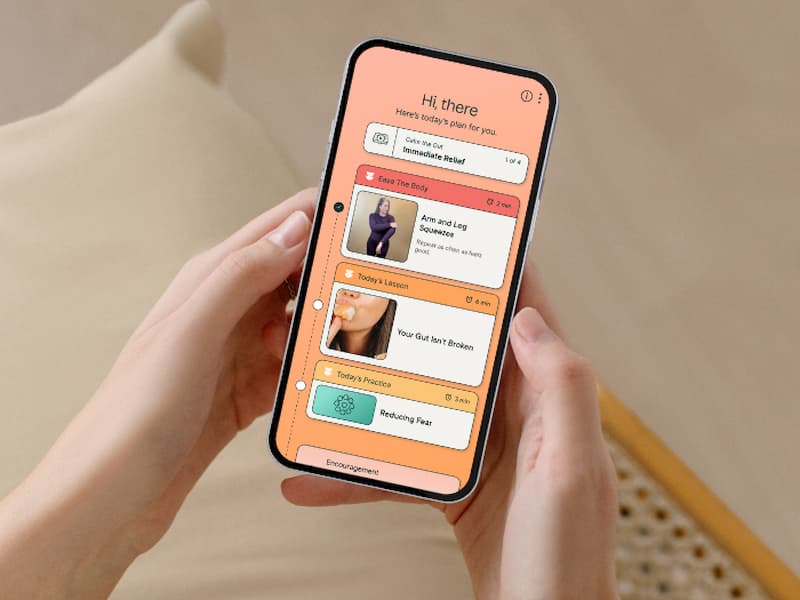
You can’t un-inherit this, and you don’t need to. What you can change is how loud the alarm runs, and that’s exactly what Your Daily® was built to help with.
Picture a smoke detector installed a little too close to the stove. It’s not broken, it’s just calibrated to panic over things that were never actually a fire: toast, steam from the rice cooker, a candle.
Every time it shrieks, the whole kitchen scrambles, even though nothing’s burning. Your nervous system can end up wired the same way, treating ordinary moments like emergencies because that sensitivity may be partly inherited
Your Daily® plan retrains that detector. Everyday you’ll get somatic movements, short lessons, and small practices woven into your day slowly rewire your body to tell the difference between an actual fire and a piece of toast.

Calm the alarm, calm the gut.
We never say “just relax” or “calm down” around here.
When your nervous system thinks there’s danger, it pulls blood flow and energy away from digestion and sends it to your muscles and heart instead, useful if you’re actually in danger, expensive if your alarm has been stuck on for years.
Your gut is one of the first places that pays for it. Calming the alarm isn’t a mood upgrade. It’s handing digestion back the resources it needs to do its job. You inherited the wiring. How loud it runs today is still up to you.
Sources