Hypermobility affects gut health more than most people expect, and connective tissue is the through-line connecting the two.
If your hypermobile joints are part of hEDS or HSD, gut problems often come with the territory. The connection between hyper-mobility and digestion is more documented than most people realize.
You’ve probably had two separate charts started on you:
- One for the joint pain, the dislocations, the chiropractor who called you “bendy” like it was a compliment.
- Another for the gut, the bloating, the reflux, the stomach that seems to have its own weather system.
Different appointments, different specialists, maybe even different buildings, but your flexible joints are connected to your constant gut issues.
And the connection between them is well documented.
How common are gut problems with hypermobility?
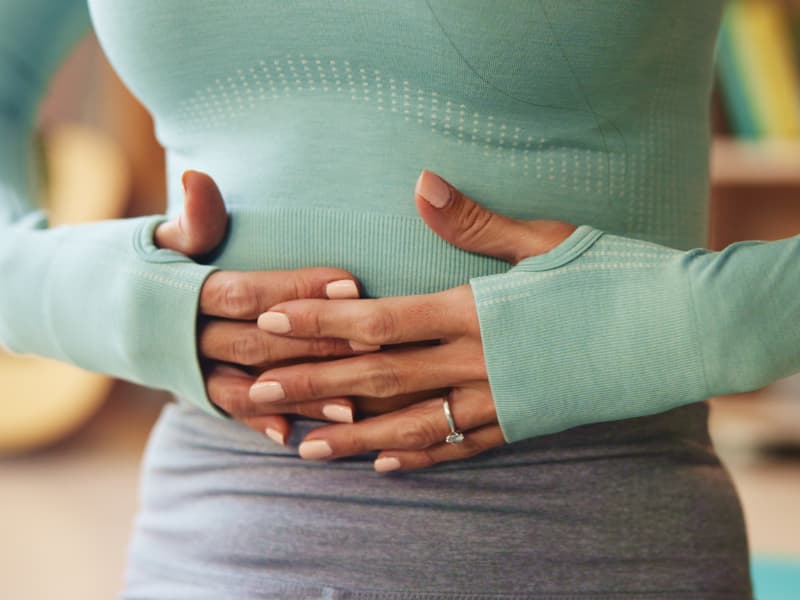
In a survey of over 600 people with hypermobile Ehlers-Danlos syndrome or hypermobility spectrum disorder, 98% met diagnostic criteria for a disorder of gut-brain interaction.
That’s not “some” or “many.” In that surveyed group, it was basically everyone.
If you have loose, hypermobile joints, the odds that your gut is also giving you trouble are closer to the norm than the exception.
Why hypermobility can affect digestion
Collagen holds your joints together, and it also moonlights holding up your organs and your intestinal wall, giving them the position and tension they need to function.
When that structure runs looser than average, it can look like organs sitting lower than they should, called visceral ptosis.
It can look like a weaker muscle at the base of your esophagus, letting acid slip back up as reflux. It can look like a hernia, tissue pushing through a wall that isn’t holding its shape as firmly as it should. Researchers have also proposed that a more stretchable bowel wall could contribute to bloating or unpredictable motility.
The mechanical properties of the bowel wall help shape how it stretches and responds to pressure. That makes altered connective tissue one possible contributor to symptoms.

Science Corner: The tissue evidence behind it.
Researchers have found that connective tissue in people with hEDS is objectively softer and less stiff than in people without it, and skin biopsies show altered collagen fibril structure that disrupts how the cells inside that tissue adhere to each other and respond to stress.

Why standard gut advice doesn’t work for hypermobile bodies
Digestion isn’t run by your gut alone, much as it likes to take all the credit. The muscle contractions that move food through your system (what doctors call motility) are coordinated mainly by your gut’s own enteric nervous system, with input from the vagus nerve and other autonomic pathways.
You’ve probably been told to gut the gluten and dairy. Try a probiotic. Eliminate sugar. All reasonable advice for a gut whose plumbing is sound and the water’s the problem.
Yours has looser pipes and a signal that shows up late, if it shows up at all, and no amount of oat milk is fixing that.
How to manage gut symptoms with hypermobility
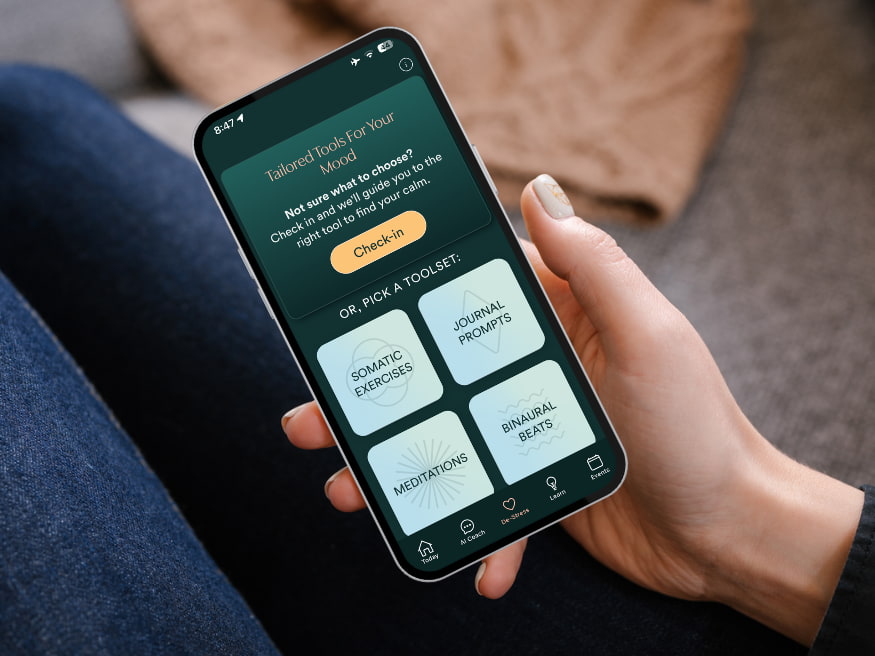
This is exactly why Your Daily® doesn’t lead with food rules and instead works directly on the nerve signals that impact digestion.
Short, consistent, body-based practices help your nervous system send steadier signals to your gut, instead of asking your gut to behave while the signal it’s waiting on keeps arriving late, or is being confused.
It won’t change your connective tissue. But it can change how reliably your nervous system shows up for the digestion your body is trying to do anyway.
FREE WORKSHOP
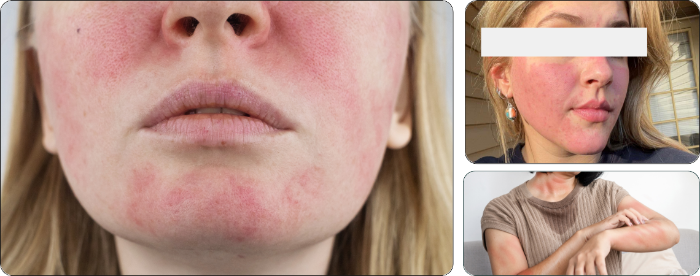
POV: You flush after meals that used to be fine
Reactions. Flushing and bloating after eating. Anxiety that shows up out of nowhere. 2am wake-ups. It’s not random, and there is relief.